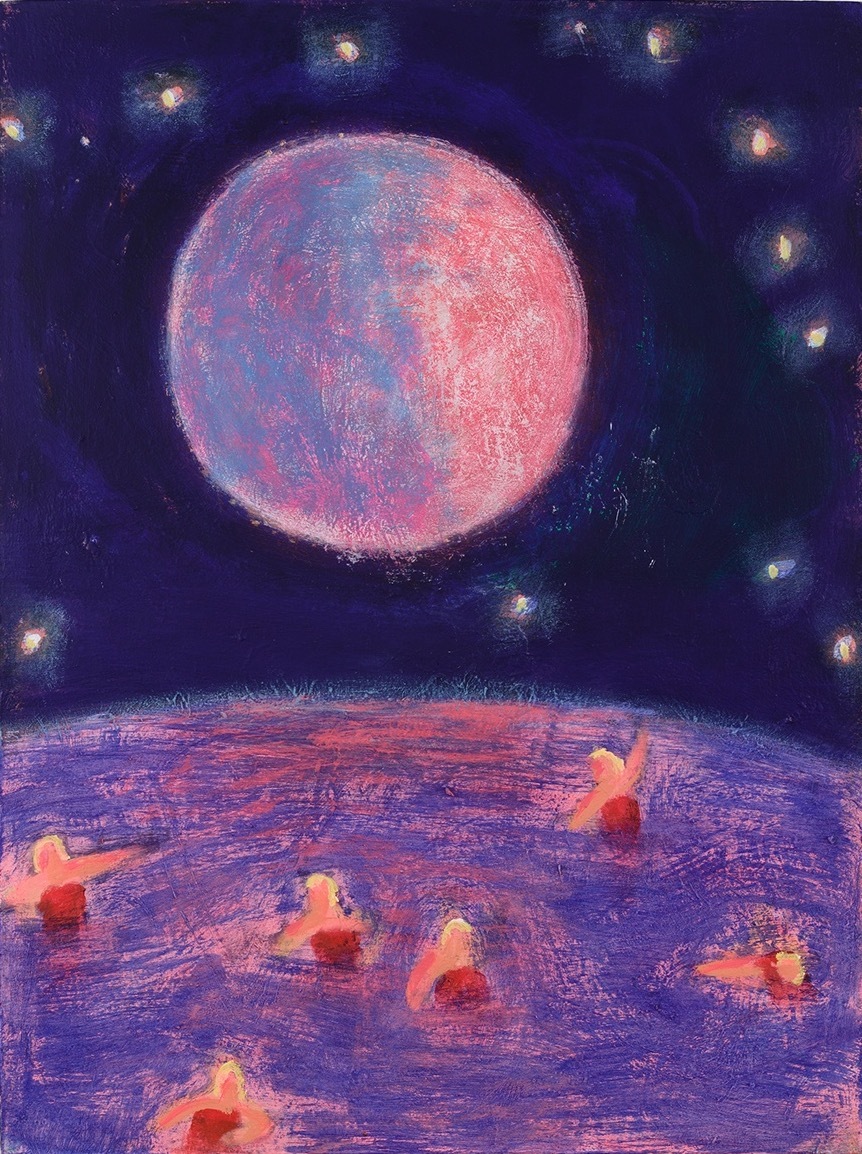
I am keen on art since I was young. And based on my study background in Marketing, I was hoping that I can work for a museum back in China as a marketer one day. Art is and will continuously play an increasingly important role in the life of Chinese.
This is because as the physical life of Chinese gets better, they have more energy and money to be spent on having fun on their leisure time and on enriching their spiritual world. Visiting museums more frequently seems an optical choice as it provides an excellent chance for them to maintain close contact with different works of masters, so as to grow aesthetic ideas and to grow historical knowledge.
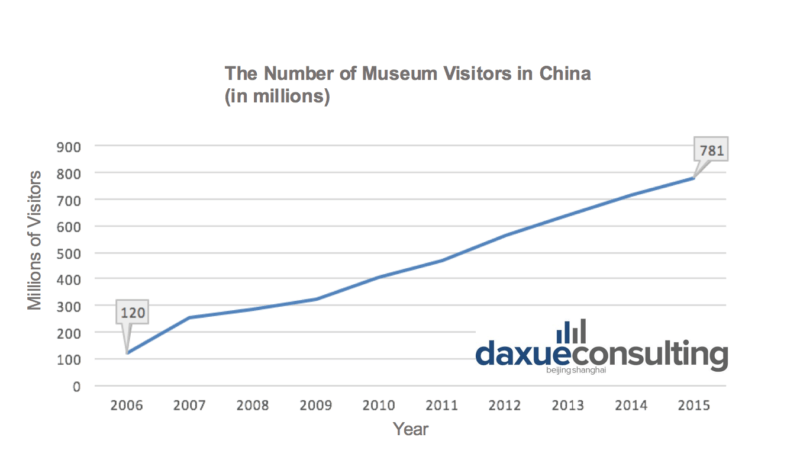
According to the National Bureau of Statistics of China, the number of museum visitors rising from 120 million in 2006 to approximately 781 million in 2015.
When it comes to marketing for museum, there is a lot to consider. For example, how to uphold a strong brand image, how to maintain closely relationships with customers, and how to differentiate your brand with competitors. As we are now living in a world of digital economy, there are a lot of advanced digital techniques that are taken into good use for marketing for museums as a marketer.
Firstly, the flexible use of official Wechat account- a feature on a popular social media app Wechat which are over 90% downloaded by Chinese who possess a smartphone. App users get information about exhibitions and museums directly through their official accounts and buy tickets by scanning the QR code linked at the button of the article. What is more, there are rooms for people to exchange opinions freely among hot topics with whoever follow the same official account and introductions about innovative stuffs and places that might interest them, so as to build a closer relationship with customers as a ‘touchpoint’, more specifically, the more frequently people check the official account, the more likely people will pay a visit to the museum recommended.

As the example posted above, this is an official Wechat account named Mars, in which includes five main features: Insider, Guide, Choice, News, Topic. With the help of official account, the museum can access what Tencent now over 1151 million total users on WeChat.
Secondly, the extensive application of AI (Artificial intelligence)-a powerful tool used to attract more audience by increasing visitor experience and to better integrate resources by forecasting the number of visitors.
Berenson and Pepper are two human-like robots that are used to interact with visitors, with Berenson being able to change the color of eye and facial expression based on the feedback from visitors as it contains a camera in its eye, the color of its eye will turn to green and will smile if receiving positive reactions, while will turn to red and frown the opposite. Pepper, the upgrade version of Berenson, was used in different museums in U.S. with the purpose of answering people’s questions and telling stories with the help of voice, gestures and an interactive touch screen (Lauren Styx,2019).
Another way AI used to help marketing for a museum is to be proactive by predicting the number of people who fail to show up to collect tickets before the museum opens, as a consequence, the museum could decrease its actual capacity to open in order to eliminate potential loss.
In the future, as a marketer for museum, I should be more accustomed to digital business processes and virtual working as it is an inevitable trend. There are some digital tools that hopefully could be taken into practice to help satisfying and understanding our customers better.
An application named Museum Guide 2.0, which use a head mounted mobile eye tracker in combination with content-based image retrieval technology, according to its inventors, it acts like an unobtrusive personal guide of a visitor. When it detects the visitor is looking at a specific art object, the earphone visitor wears will play relevant audio information about it automatically, and the audio information changes alongside the visitor’s eye movement. Besides, this design could also be used to collect visitor’s preferences towards art works.
This would greatly help enhancing user experiences and making up for the lack of audio guides or commentators on specific holidays. Take my own visiting experience on Britain Museum few months ago, for example, which took me nearly an hour waiting in line to get an audio guide. With the help of this digital technology, hopefully, users can save time as well as better enjoy themselves on the museum.
Because of the development of ICT, as a marketer nowadays, one of the most important ability I need to be equipped with is to integrate all type of information and formulate a scheme about what is best suitable for the future of the museum.
References:
Gisbergen, S. B. (n.d.). When Sound Modulates Vision: VR Applications for Art and. Academy for Digital Entertainment.
Is affordable art the next big consumer trend in China? (April 24, 2014).
Styx, B. L. (March 28 2019). How are museums using artificial intelligence, and is AI the future of museums?
The future of work jobs and skills in 2030. (n.d.).
Xia, Li. (2018). Across China: “Immersive” exhibitions become hot trend in China.

